



The random video chat landscape has shifted considerably in 2026. From new AI-powered moderation systems to significant regulatory changes affecting how platforms handle user data, the industry is evolving rapidly. If you’ve noticed changes on your favorite Omegle alternatives, you’re not imagining things—there’s a lot happening behind the scenes that affects how these platforms operate and what users can expect.
AI Moderation Becomes Standard Feature
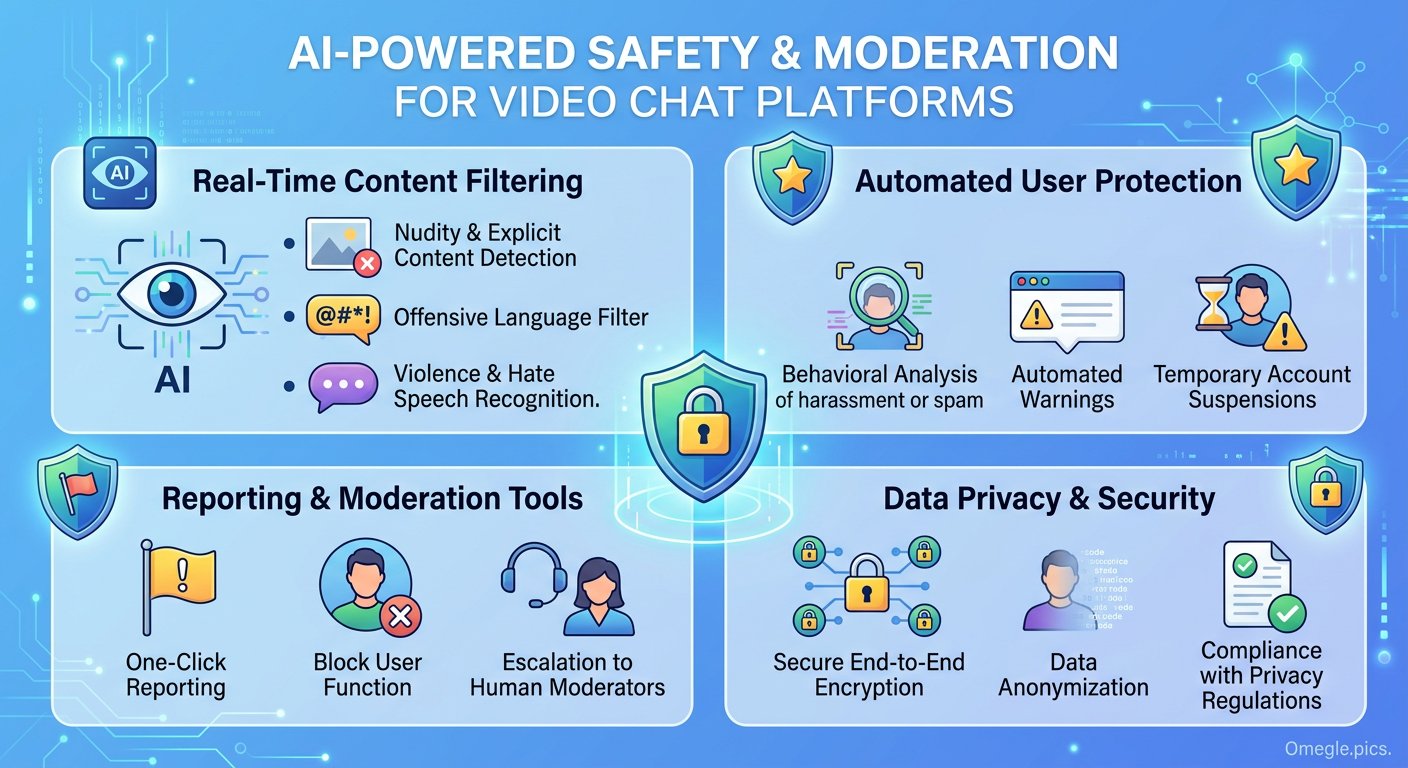
Two years ago, advanced AI moderation was a premium feature that distinguished newer platforms from older alternatives. In 2026, it’s becoming table stakes. Most serious random video chat platforms now implement some form of AI-powered content detection, moving beyond simple keyword filters to real-time analysis of video feeds.
The shift reflects both regulatory pressure and user demand for safer experiences. Stream’s moderation roadmap for 2026 shows platforms investing heavily in context-aware systems that can distinguish between intentional violations and accidental content. Rather than relying on keywords alone, these systems interpret tone, reducing false positives that interrupt legitimate conversations.
For users, this means fewer interruptions from overzealous filters—but also more consistent enforcement. The days of encountering obvious violations while platforms do nothing are fading. Whether this represents genuine safety improvement or just better censorship depends on your perspective, but the trajectory is clear: AI moderation is now standard across major platforms.
Enhanced Privacy Controls and Data Protection
Privacy regulations have created significant changes in how video chat platforms operate, particularly in the United States where multiple state laws took effect in 2026. Ketch’s analysis of 2026 privacy laws documents how states including Oregon, Virginia, and Texas now require stricter controls over user data, with particular emphasis on protecting minors and restricting data collection practices.
The operational impact is substantial. Platforms must implement verifiable age verification systems, obtain parental consent for users under 18, and limit certain data collection practices. For random video chat sites, this means changes to onboarding flows, account management options, and data retention policies.
These regulatory changes also bring new enforcement mechanisms. California, in particular, has signaled aggressive enforcement posture with substantial settlements for privacy violations. Platforms operating in multiple states must navigate a patchwork of requirements that vary by jurisdiction.
For users, the practical effects include clearer privacy policies, more control over personal data, and platforms taking protections more seriously. Whether you trust these changes depends on your skepticism about platform promises—but the legal framework is now stronger than it was even a year ago.
New Safety Verification Systems
Beyond AI moderation, platforms are implementing more sophisticated verification systems designed to reduce anonymous bad behavior. The thinking goes that accountability reduces violations—people act differently when they can be identified.
Some platforms now offer optional verification badges that users can earn through various methods. These don’t make verification mandatory, but they create incentive structures that encourage legitimate users to prove their identity. It’s a middle ground between completely anonymous chat and full identity requirements.
The effectiveness of these systems varies. Verification reduces throwaway accounts used for harassment but also creates friction for users who value anonymity. Platforms are experimenting with different approaches, and we expect continued evolution in this space throughout 2026 and beyond.
For users concerned about safety, verification systems offer a way to identify more trustworthy chat partners. For those prioritizing privacy, they represent another step away from the wild-west era of random video chat. The tension between these priorities will continue shaping platform development.
Platform Consolidation and Market Shifts
The market for random video chat platforms has matured significantly. The frantic pace of new entrants we saw in 2023 and 2024 has slowed, replaced by consolidation as stronger platforms absorb weaker competitors and niche services get acquired or shut down.
This consolidation has mixed implications for users. On one hand, established platforms have more resources to invest in safety features and infrastructure. On the other hand, reduced competition may decrease innovation and limit user choice. The Verge’s overview of 2026 tech laws notes how regulatory complexity favors larger platforms with compliance resources, potentially accelerating consolidation.
For our platform comparison, this means the landscape is becoming clearer—fewer choices but potentially better quality among the survivors. We continue monitoring which platforms invest in safety infrastructure versus those cutting costs to survive.
The platforms that appear to be winning are those balancing safety with user experience. Heavy-handed moderation drives users to less restrictive alternatives. Platforms that find this balance while meeting regulatory requirements will likely dominate the market going forward.
What These Changes Mean for Users
Looking at the aggregate of platform changes in 2026, several patterns emerge for users:
Safety is improving but not solved: AI moderation catches more obvious violations than before, but sophisticated bad actors can still evade detection. User vigilance remains important.
Privacy regulations create new protections: Legal frameworks now provide stronger protections for personal data and minors specifically. Enforcement varies, but the baseline has shifted.
Platform choice matters more: With consolidation, the platform you choose has impact on your experience. We recommend checking safety features and privacy policies before committing to any service.
Verification is becoming normalized: Optional identity systems are spreading, creating new ways to assess who you’re talking to. This may fundamentally change the anonymous nature of random video chat.
For more on staying safe while using these platforms, see our comprehensive privacy guide which covers practical steps you can take regardless of platform policies.
The random video chat industry in 2026 is more mature, more regulated, and more safety-conscious than at any point in its history. Whether this represents genuine improvement or just better marketing depends on continued observation. We’ll keep tracking these changes and updating our recommendations as the landscape evolves.
The bottom line: users have more tools and protections available than before, but the responsibility for safety still partly rests with individual users. Understanding what platforms offer—and what they don’t—helps you make better decisions about where and how to chat with strangers online.